

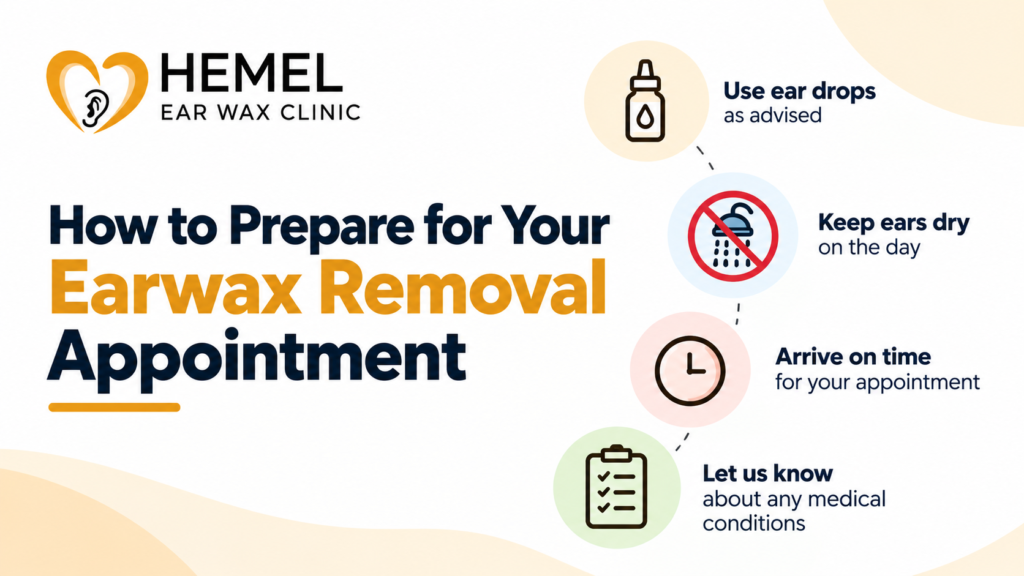
Preparing your ears properly before microsuction can make earwax removal easier and more comfortable, especially when the wax is hard or impacted.
Booking professional earwax removal is often the next step when blocked ears, muffled hearing, itching or fullness do not improve on their own.
However, a little preparation before the appointment can make the treatment easier.
At Hemel Earwax Clinic in Boxmoor, Hemel Hempstead, patients are advised to use olive ear spray for five days before treatment when appropriate. This helps soften hard wax and may make microsuction more comfortable and efficient.
Knowing what to do—and what not to do—before your appointment can also help prevent the wax from becoming more deeply impacted.
Key Takeaways
- Hemel Earwax Clinic recommends olive ear spray for five days before treatment when suitable.
- Do not insert cotton buds, fingers or cleaning tools into your ears.
- Tell the clinician about previous ear surgery or eardrum problems.
- Seek advice before using drops if you have pain, discharge or a suspected perforation.
- Bring information about relevant ear problems or hearing aids.
- An ear examination takes place before wax removal.
- Very hard wax may occasionally require further softening and a follow-up visit.
Why Should You Prepare Before Earwax Removal?
Preparing beforehand can soften hard wax and make professional removal easier.
Earwax varies considerably between people. Some wax is naturally soft and easy to remove, while other wax may become dry, hard or deeply impacted.
When wax is very firm, the clinician may need to work more slowly or may not be able to remove everything comfortably during the first appointment.
Softening the wax before treatment can therefore improve access and may make the procedure more comfortable.
Preparation is not about trying to remove the wax yourself. The goal is simply to soften it so the clinician can assess and remove it more easily.
Should You Use Olive Ear Spray Before Your Appointment?
Hemel Earwax Clinic recommends olive ear spray for five days before treatment when it is appropriate for your ears.
The spray helps soften the earwax rather than physically removing it.
Follow the product instructions and any advice provided by the clinic. There is no benefit in inserting cotton buds afterwards to try to pull softened wax out.
Some wax may naturally move towards the outer ear, which is normal.
The NHS also advises that olive or almond oil can help soften earwax in suitable patients, although drops should not be used if you have a perforated eardrum.
When Should You Ask Before Using Ear Drops?
Ear-softening products are not suitable for every ear, so ask for advice if you have an existing ear problem.
Contact the clinic, pharmacist or another appropriate healthcare professional before using drops if you have a history of ear surgery, a known or suspected perforated eardrum or another significant ear condition.
You should also seek advice if you currently have severe ear pain, bleeding or discharge.
In these situations, the priority is to determine what is happening inside the ear rather than automatically treating the symptoms as ordinary wax.
What Should You Avoid Before Your Appointment?
Avoid putting anything inside the ear canal before your visit.
Do not try to clear the blockage using:
- Cotton buds
- Ear picks
- Hairpins
- Fingers
- Ear candles
- Home suction devices
- Camera-equipped scraping tools
Cotton buds are particularly common. Although they may remove a small amount of visible wax from the entrance, they can push deeper wax further towards the eardrum.
This can make the blockage more compact and potentially make professional removal more difficult.
Should You Clean Your Ears Before Microsuction?
You do not need to deeply clean your ears before your appointment.
Simply keep the visible outer ear clean as you normally would.
Do not try to make the ear canal look cleaner for the clinician. Earwax is exactly what they expect to assess.
Trying to remove it shortly before the appointment may irritate the canal or push the wax deeper.
Professional earwax removal begins with an examination, so leaving the canal alone is usually the better approach.
What Information Should You Tell the Clinician?
Tell the clinician about previous ear problems because they can affect how treatment is approached.
Before treatment, you may be asked about your symptoms and ear history.
Important information can include previous ear surgery, a perforated eardrum, recurring ear infections, dizziness, tinnitus or previous difficulties with earwax removal.
If you wear hearing aids, mention this as well. Hearing aids can sometimes contribute to wax build-up and may also stop working as effectively when the canal becomes blocked.
Giving an accurate history allows the clinician to tailor the assessment and treatment to your ears.
Do You Need to Remove Hearing Aids Before Your Appointment?
You can bring your hearing aids with you, but they will normally need to be removed during examination and treatment.
You do not usually need to stop wearing them for several days before the appointment unless specifically advised.
However, if softened wax begins coming out of the ear, keep your hearing aid clean according to its usual maintenance instructions.
After successful wax removal, some hearing-aid users notice that the device sounds clearer because the ear canal is no longer obstructed.
What Happens When You Arrive?
Your appointment begins with an ear examination rather than immediate suction.
At Hemel Earwax Clinic, the clinician uses an otoscope to examine the ear canal and assess how much wax is present.
The clinician then explains the procedure, discusses possible side effects and obtains your consent before treatment.
Where microsuction is appropriate, controlled suction is used to remove the wax.
A typical appointment may involve:
- Reviewing your symptoms and ear history.
- Examining the ear canal and eardrum.
- Checking the amount and condition of the wax.
- Explaining the treatment.
- Performing microsuction where suitable.
- Rechecking the ear.
- Providing aftercare advice.
The whole appointment is commonly completed within around 30 minutes, although difficult wax can take longer.
What If the Wax Is Still Too Hard?
Very hard or deeply impacted wax may occasionally need more softening before safe removal.
Even after preparation, some wax can remain difficult to remove.
Trying to force stubborn wax out may cause unnecessary discomfort or irritation. A careful clinician may therefore stop treatment and advise further softening.
Hemel Earwax Clinic states that patients whose wax is too hard to remove can be advised to use drops and return for a free follow-up.
A second attempt does not mean the treatment has failed. Allowing hard wax more time to soften can be safer than trying to remove it forcefully.
Is Microsuction Painful?
Most people tolerate microsuction well, although you may notice suction noise, pressure or mild sensitivity.
The procedure does not normally involve flushing water into the ear.
Because the clinician views the ear canal during treatment, they can monitor the position of the wax and work carefully around the canal.
If you feel uncomfortable or dizzy, tell the clinician immediately. Treatment can be paused or adjusted.
Your comfort is more important than completing the procedure quickly.
What Symptoms Should You Mention Before Treatment?
Tell the clinic if your symptoms are sudden, severe or unusual rather than assuming they are caused by earwax.
Seek appropriate medical advice if you have:
- Sudden hearing loss
- Rapidly worsening hearing
- Severe ear pain
- Bleeding
- Ear discharge
- Significant dizziness
- Fever with ear symptoms
Sudden hearing loss should not simply be treated as routine wax blockage.
An examination can help distinguish ordinary wax from symptoms that need a different type of medical assessment.
What Are Common Preparation Mistakes?
“I should use cotton buds after applying olive spray.”
No. This may push softened wax deeper into the ear canal.
“I need to remove as much wax as possible before my appointment.”
No. Leave the wax for the clinician to assess and remove professionally.
“Using more drops will make treatment work better.”
Not necessarily. Follow the recommended instructions rather than using excessive amounts.
“Every patient must use olive spray.”
Not always. Preparation depends on the individual ear and medical history.
“If my ear suddenly becomes blocked, it must be wax.”
Not necessarily. Sudden hearing changes need appropriate assessment.
How Can Hemel Earwax Clinic Help?
Hemel Earwax Clinic provides professional ear assessment and microsuction in Boxmoor, Hemel Hempstead.
The clinic follows an assessment-first process. Your ears are examined before treatment, the procedure is explained and microsuction is performed where appropriate.
After treatment, you receive personalised ear-care advice to help reduce future wax problems.
For suitable patients who find attending the clinic difficult, an at-home earwax removal service may also be available.
Hemel Earwax Clinic
49A St John’s Road
Boxmoor
Hemel Hempstead
HP1 1QQ
People Also Ask
Should I use olive oil before earwax removal?
Hemel Earwax Clinic recommends olive ear spray for five days before treatment when suitable to help soften the wax.
How many days should I soften earwax before microsuction?
The clinic recommends approximately five days of olive ear spray before the appointment where appropriate.
Can I use cotton buds before microsuction?
No. Cotton buds may push wax deeper into the ear canal.
Do I need to clean my ears before the appointment?
No deep cleaning is necessary. Clean only the visible outer ear and avoid inserting anything into the canal.
Can I wear hearing aids before earwax removal?
Usually yes, although they will need to be removed during the ear examination and treatment.
What happens if the wax is too hard to remove?
The clinician may recommend further softening and arrange a follow-up rather than forcing difficult wax.
Conclusion
Preparing properly for your earwax removal appointment can make treatment easier and more comfortable.
When suitable, Hemel Earwax Clinic recommends using olive ear spray for five days before treatment to help soften the wax.
Avoid cotton buds, ear picks, ear candles and home suction tools. Instead, leave the wax for the clinician to examine and remove professionally.
Make sure you also mention previous ear surgery, eardrum problems, hearing aids or unusual symptoms before treatment.
For professional ear assessment and microsuction, contact Hemel Earwax Clinic in Boxmoor, Hemel Hempstead.
Frequently Asked Questions
How long does an earwax removal appointment take?
Many appointments take around 20–30 minutes, including assessment, treatment and aftercare.
Do ear drops remove the wax completely?
They mainly soften the wax and may help it move naturally. They do not guarantee that impacted wax will clear.
Can I use olive oil with a perforated eardrum?
Do not use ear drops without professional advice if you have a known or suspected perforated eardrum.
Does microsuction use water?
No. Microsuction removes wax using controlled suction.
What should I bring to the appointment?
Bring information about relevant ear conditions, previous surgery and hearing aids. Your medication information may also be useful if relevant.
Can both ears be treated at the same appointment?
Yes, when both ears need treatment and removal is appropriate.
Can I go back to normal activities afterwards?
Most people can return to normal daily activities after microsuction.
Where can I book earwax removal in Hemel Hempstead?
Hemel Earwax Clinic in Boxmoor provides professional ear examinations and microsuction appointments.
